Dalmia Bharat Ltd on Monday announced the acquisition of the cement assets of Jaypee Group's flagship company Jaiprakash Associates Ltd and its associate firms at an enterprise value of Rs 5,666 crore. In a regulatory filing, Dalmia Bharat informed that its wholly-owned subsidiary Dalmia Cement Bharat Limited (DCBL) has entered into a "binding framework agreement for the acquisition of clinker, cement and power plants from Jaiprakash Associates Limited and its associate company." The deal includes a total cement capacity of 9.4 Million tones (MnT) per annum, along with clinker capacity of 6.7 MnT and thermal power plants of 280MW at an enterprise value of Rs 5,666 crore, it added.

Conglomerate has become the first corporate house in India's history to adopt a historical monument, in a Rs 250 mn contract spanning five years.
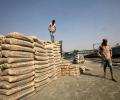
Indian cement manufacturers, despite a stable Q4FY26, are bracing for significant profitability pressures from Q1FY27 onwards due to escalating input costs, primarily driven by the West Asia conflict's impact on coal and petcoke prices.
With over 10 deals announced in 2024, the cement sector logged the highest number of pacts, including acquisitions and fresh financial investments, in a single calendar year since 2014, with the combined value of investments over $3.5 billion. During the year so far, 11 deals have been announced, according to Bloomberg data.
Cement manufacturers' show during the June 2023-ended quarter (Q1FY24) has indicated an intensified slugfest for market share. For instance, Dalmia Bharat (Cement) said it has lost market share in eastern India owing to lack of price discipline. Industry analysts also said that the seasonal weakness in cement prices for Q1 is showing up earlier than usual.

Mining conglomerate Vedanta on Friday beat Gautam Adani's Group to make a winning bid for the acquisition of debt-ridden Jaiprakash Associates (JAL) for Rs 17,000 crore, according to sources. The bid value translates into Jaiprakash Associates' net present value of Rs 12,505 crore.

Analysts remain selective on cement stocks amid the likely government's capex push ahead of the scheduled general elections in May 2024. While UBS has initiated coverage on the Indian cement sector with an anti-consensus negative view and suggests investors sell select cement stocks on a rally, those at Nomura remain selectively bullish on the sector and prefer companies with large brownfield optionality and multi-region presence. In the near-term, UBS expects strong earnings of cement companies in the next two quarters to be driven by robust demand and margin tailwinds, but suggests any sharp uptick in stock prices could offer a good opportunity for booking profits in the related counters.

Five companies have submitted resolution plans for Jaiprakash Associates Ltd (JAL), the flagship company of the beleaguered Jaypee group, the company has said in a stock exchange filing. The Adani group, Vedanta, Jindal Steel & Power, Dalmia Bharat, and PSP Projects are the final bidders and the offers range from Rs 10,000 crore to Rs 11,000 crore, said a source close to the development.
The recent price correction in broader markets has hit cement companies hard. So far in the current month, smallcap firms like Visaka Industries, Andhra Cements NCL Industries, Sahyadri Industries, and KCP have lost 19.7 per cent, 14.3 per cent, 13.8 per cent, 13.5 per cent, and 11.5 per cent, respectively. On the contrary, largecap companies, while registering losses for the month, have seen a softer blow.
There has been a sharp slowdown in revenue and profit growth in the cement sector in recent quarters but it is yet to show in the share prices of cement companies. On the contrary, there has been a rally in cement stocks and a re-rating of their equity valuation in the past three years despite an earnings contraction during the period.
The Indian cement industry is hopeful of greener pastures after a long period of stress led by pricing pressures and other factors. The second half of FY25 is expected to bring respite due to price hikes, cost benefits and higher volumes, said analysts. The optimistic momentum also makes cement stocks attractive, analysts added, advising to buy dips following a period of bearish sentiment in these stocks.

Acceleration in demand, together with marginal price hikes of about 2-3 per cent by cement companies in the October-December quarter (third quarter, or Q3) of 2022-23, may not be enough to cushion the impact of high input costs on the bottom line, reveal Bloomberg consensus estimates for the quarter. Year-on-year (YoY) net sales growth in Q3 will come in at nearly 7 per cent, shows Bloomberg data, while bottom-line growth will show a sharp decline of 25 per cent from a year ago. The earnings before interest, tax, depreciation, and amortisation (Ebitda) will likely decline by nearly 5 per cent versus a year ago, shows data.

The cement industry continues to present a puzzle to investors.
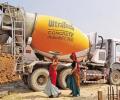
UltraTech currently has 19% market share with Shree Cement commanding 22% of the market
The cement sector may be looking at better realisations and higher volume offtake going by the trends of the October-December quarter of the 2022-23 financial year (Q3FY23), a recent price hike, and the promise of a continued infrastructure thrust in FY24. In Q3, revenues rose by an aggregate of 17 per cent year-on-year (YoY), but Ebitda (earnings before interest, tax, depreciation and amortisation) per tonne, fell by 14 per cent YoY while profit after tax (PAT) rose by 23 per cent YoY. Expenses were up 30 per cent per tonne YoY - power and fuel costs in particular - and that's no surprise given the rise in fossil fuel prices.

'How can the monument where the prime minister unfurls the flag on Independence Day, in a ceremony broadcast and telecast nationally, be maintained by a private entity?' asks Jyoti Punwani.

'The chief minister believes the poorest of the poor have the first right on government resources.'

'The Indian cement sector is the most energy-efficient worldwide, mainly due to modern technology used in the plants but also because of efficient monitoring of a plant's performance on a daily basis, focusing on energy savings and carbon dioxide emission reductions.'
India on Monday announced the results for the country's first critical mineral auction. Amid the tepid response from big players, the list of successful bidders included some lesser known names. A total of five companies secured bids for six critical mineral blocks of graphite, manganese, phosphorite, lithium, and rare earth elements with auction premiums ranging from 13.05 per cent to 400 per cent.

Industry players said they were indeed seeing a serious fall in capacity usage, though some sectors were seeming to prevent further fall in the overall capacity utilisation.
The acquisition of the debt-laden Binani has catapulted Birla-owned UltraTech to the top spot in India, leaving it free to turn attention to overseas market
However, many historians, conservationists and artists have slam move to 'entrust' Red Fort to cement company.

The sale of Essar Oil was India's biggest deleveraging exercise undertaken by any debt-heavy group
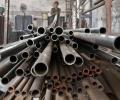
Uttam Galva Steels is a part of the Reserve Bank of India's second list of cases, which will be referred to the bankruptcy tribunal for insolvency proceedings after lenders failed to resolve the account by December 2017.

Top 100 billionaires see their wealth rise 10%; top 20 account for half of total wealth of top 100.

Instead of the minority stake they held earlier, now they have controlling stake in many firms

Ajit Mishra, vice president, Research, Religare Broking, answers your queries.
The rush to enter the world's fastest-growing mobile services market has attracted a wide range of applicants for telecom licences with the Department of Telecommunications.

Ajit Mishra, vice president, Research, Religare Broking, answers your queries.

Ajit Mishra, vice president, research, Religare Broking, answers your queries.

'Kerala isn't as dependent on agriculture like Bihar or Odisha or even other southern states.' 'Economic losses would not be too intense, unlike other states.' 'The floods could, at best, impact India Inc's earnings for a quarter or two.'

Top companies have grabbed a bigger pie of their sectors in the pandemic period, leading to a further rise in market concentration in many industries as measured by the Herfindahl-Hirschman Index (HHI). The HHI score, which indicates competitive intensity in an industry (or a lack of it), reached a new high in FY21 as bigger firms raised their revenue market shares either organically or through mergers and acquisitions. A higher HHI score indicates a rise in market concentration in favour of a few firms while a lower score means that the industry's revenue is more evenly divided among many companies

Ajit Mishra, vice president, Research, Religare Broking, answers your queries.

Some make for good investment ideas even after a strong run-up but others could see gains fizzling.

The financial year ending Saturday saw such big-ticket events that set the directional tone for the country's business journey.
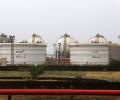
The Essar Oil, Rosneft deal also helped Arpwood Capital, boutique investment bank, co-founded by Rajeev Gupta and Raj Kataria, to grab the second spot in the mergers and acquisitions league table.

The 30-share Sensex and the 50-share Nifty ended flat at the mark of 29,008 and 8,767 respectively.

After enduring volatility for the first two months of calendar year 2016 (CY16), global equity markets have recouped some of the losses in March. Jigar Shah, chief executive officer, Maybank Kim Eng Securities, believes the next triggers for the rally will come from a soft landing in China and no recession situation in the US.

Ajit Mishra, vice president, Research, Religare Broking, answers your queries.
 © 2026 Rediff.com - Advertise with us - Disclaimer - Privacy Policy - Sitemap - Feedback - About us - Terms of use - Grievances